Co-Managed IT for Municipalities: When Shared Support Makes Sense
Municipal IT teams have a lot to keep running, and the work doesn’t stop when resources are stretched. Employees still need support, systems need to be maintained, cybersecurity risks need attention, and technology projects still have to move forward.
Then something changes. A major project requires more time or expertise than the team has available. A staff member is out for an extended period. A cybersecurity issue needs specialized attention while everyday support requests continue to come in. The internal IT team may be fully capable of managing the municipality’s technology, but there are only so many hours in a day.
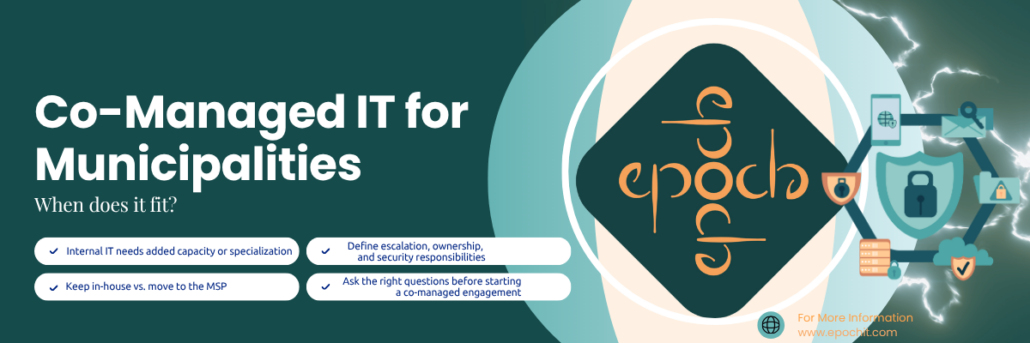
That doesn’t necessarily mean outsourcing IT entirely. Co-managed IT for municipalities provides a way to bring in additional support while keeping the existing team in place. An outside IT provider works alongside internal staff, helping where more resources or expertise are needed.
What Co-Managed IT Means for a Municipality
Co-managed IT is a shared approach to technology support. The municipality retains its internal team, while a managed service provider (MSP) assumes specific responsibilities based on where help is needed.
For one municipality, that might mean keeping employee support and applications in-house while an MSP helps with system monitoring and cybersecurity. Another may handle most technology needs internally but bring in outside help for a network upgrade, cloud project, or coverage when a team member is unavailable.
That’s what separates co-managed IT from a fully managed approach. With fully managed IT, the provider takes primary responsibility for supporting the organization’s technology. With co-managed IT, the work is shared.
When Internal IT Needs Additional Support
Municipal IT teams may support multiple departments while managing networks, devices, applications, backups, security, vendors, and everyday employee needs. When something new comes up, those responsibilities don’t go away.
Maybe a network upgrade keeps getting pushed back because day-to-day issues take priority. A cybersecurity initiative requires expertise the team doesn’t regularly need in-house. A staffing change leaves fewer people available to respond to support requests.
Co-managed IT can provide another resource in those situations. The internal team continues to manage the areas it knows best, while an outside provider helps with specific projects, coverage, cybersecurity, monitoring, and other needs.
The goal isn’t to replace internal IT. It’s to give the team support where it can make the biggest difference.
What Can Stay In-House and What Can Move to an MSP
There’s no single way to divide the work. Internal IT may continue handling employee support, applications, vendors, or systems that require a detailed understanding of municipal operations. An MSP might help with monitoring, patching, backups, cybersecurity, infrastructure, or other areas that need more resources.
Projects can be shared too. An internal team may know exactly what the municipality needs from a network upgrade, cloud migration, hardware refresh, or cybersecurity project, but need additional technical help to get it done.
If something is working well internally, there may not be a reason to change it. Co-managed IT gives municipalities the flexibility to keep those responsibilities in-house and bring in help where it makes sense.
How to Define Ownership and Security Responsibilities
Sharing IT responsibilities works best when everyone knows who handles what. If a system goes down, who responds first? When should an issue move to the MSP? Who handles backups, patches, user access, and system changes? If a cybersecurity alert comes in, who investigates it and who needs to know?
Answering those questions ahead of time can help prevent duplicated work, missed tasks, or delays. Cybersecurity responsibilities should be especially clear, including who monitors systems, manages access, responds to alerts, and escalates potential incidents.
Communication matters too. Internal staff should know when and how to reach the provider, and the provider should have sufficient knowledge of the municipality’s systems and priorities to step in when needed.
Questions to Ask Before Starting a Co-Managed Engagement
Before bringing in an outside provider, start with what’s already working. Which responsibilities does the internal team handle well? Where is most of its time going? What projects or priorities keep getting pushed back?
From there, municipalities can ask:
- Where does our IT team need the most help?
- Are there skills or expertise we don’t regularly have in-house?
- Are important technology projects being delayed?
- Where would additional coverage be useful?
- Which responsibilities should stay with our internal team?
- How should cybersecurity responsibilities be divided?
- When and how should issues be escalated?
- How will the two teams communicate?
These questions can help define what support is actually needed and make expectations clear from the start.
Finding the Right Level of IT Support
Co-managed IT can be a good fit for municipalities that already have internal technology staff but need help in certain areas. It adds resources without taking away the people who already understand the organization, its systems, and the needs of its departments.
For some municipalities, fully managed IT may make more sense. For others, sharing responsibilities provides the right balance. What matters is finding an approach that fits the team and its technology needs.
At Epoch IT, we work with municipalities and other public-sector organizations through both managed and co-managed IT services. We can serve as the primary IT provider or work alongside an existing technology team, providing day-to-day support, cybersecurity expertise, project assistance, and additional resources as needed.
Could your municipal IT team use additional support? Contact Epoch IT to talk about your technology needs and whether a co-managed approach makes sense for your organization.
Building the Standard
Not sure what level of IT support your organization needs? Talk with our team about a plan built for reliability, security, and long-term growth.
Schedule a Free Consultation